media chinwag

Musings on Journalism in the Online Age

Month: March, 2016

How to Report on Political Slime

Even in a presidential election race deplorable for personal attacks and vulgar language, the exchange about the candidates’ wives seemed to be a low point.
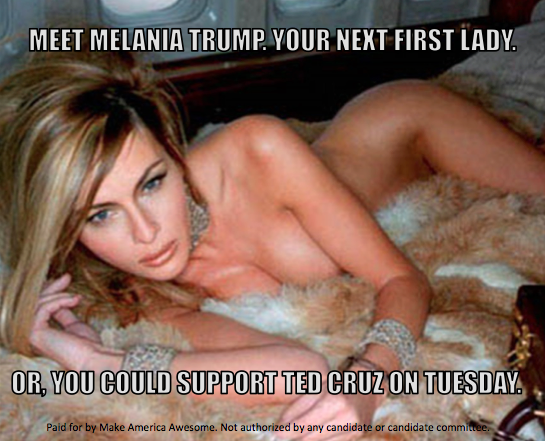
cruzad

Before the Utah Republican caucuses on March 22 a Super PAC supporting Ted Cruz ran Facebook ads with a photo of Donald Trump’s wife Melania posing in the nude, with the caption: “Meet Melania Trump. Your Next First Lady. Or, You Could Support Ted Cruz on Tuesday.” (Cruz won the voting, 69 percent to Trump’s 14 percent.)

Donald Trump fired back with a tweet threatening to “spill the beans” about Cruz’s wife Heidi:

Lyin’ Ted Cruz just used a picture of Melania from a G.Q. shoot in his ad. Be careful, Lyin’ Ted, or I will spill the beans on your wife!

Journalists gleefully took to social media, airwaves, and websites of reputable print and broadcast news organizations to cover the latest brawl involving Donald Trump.

The Trump-Cruz tussle continued on Twitter and with sound bites throughout the week. Cruz taunted, “Donald, if you try to attack Heidi, you’re more of a coward than I thought.” Trump responded with a retweet depicting a glamorous Melania side-by-side a scowling Heidi with the line, “A picture is worth a thousand words.” Cruz came back with more: “Donald, real men don’t attack women,” and “Donald, you’re a sniveling coward, and leave Heidi the hell alone.”

The War Over the Wives was extraordinary, albeit perverse, political theater. But was it news, deserving of coverage by journalists? Should the personal lives of politicians and their families be off limits? The answers to these questions are not as simple as we may like.

Undoubtedly, the right to privacy must be respected by journalists. However, exceptions can and should be made when there is an overwhelming public interest. President Bill Clinton’s private life could not be considered off limits in his “inappropriate relationship” with a 22-year-old White House intern. It illustrated several failings of legitimate interest to the public, from predatory sexual behavior and lack of sound judgment of the commander in chief to dishonoring America’s highest office.

Another exception is when public figures willingly remove the curtain of privacy, including the one around their families. The glamour image in the pro-Cruz ad came from a photo shoot published in 2000 by British GQ, when 30-year-old Melania Knauss of Slovenia was Trump’s fashion-model girlfriend (they were married five years later). According to the magazine, the photo shoot—with Melania “wearing handcuffs, wielding diamonds, and holding a chrome pistol”—took place on Trump’s customized Boeing 727.

gq cover

Though tasteless and opportunistic—well, slimy—the pro-Cruz ad, sponsored by the Make America Awesome political action committee, touched on a reasonable question concerning Trump’s lifestyle choices. With Trump loudly questioning the values of entire communities—Mexicans and Muslims, for example—his own values are certainly fair game.

Trump’s retort—as tacky, bullying, and slimy as it was—also touched on a valid issue. The “beans” appeared to refer to Heidi Cruz’s bout with depression a decade ago—including an incident that has been reported by the New York Times among others.

In 2005, after Heidi quit a post at the White House to be reunited with her public-servant husband in Texas, police responding to a 911 call reportedly found Heidi sitting next to an expressway with her head in her hands. An officer’s report later stated: “I believed that she was a danger to herself.”

The personal background of a prospective First Lady is of legitimate interest to voters. This is especially reasonable in this case, given that Heidi Cruz has played an active public role campaigning and raising money in her husband’s quest for the White House. (It can also be noted that the Cruz campaign has used their young children as cuddly props in political ads, promoting the image of Cruz as a stable family man.)

So it’s difficult for journalists to ignore personal attacks like the Cruz-Trump exchanges when the attacks relate to issues of public interest. The question is how to appropriately report on the slime-slinging.

Huffington Post came up with an idea in mid-2015. The editors felt that the Trump campaign was a “sideshow,” to be expected from a self-promoting tycoon who had made a second career as a reality TV star.

So Huffpost announced it would cover Trump’s campaign in the Entertainment section rather than as part of its political coverage. “If you are interested in what The Donald has to say, you’ll find it next to our stories on the Kardashians and The Bachelorette,” the editors said in a note to readers. By December, with Trump blowing away the rest of the Republican field for six consecutive months, it became clear this was not the answer, and Arianna Huffington herself announced a change in plan. “We will no longer be covering his campaign in Entertainment,” she told readers. It has “morphed into something else: an ugly and dangerous force in American politics.”

In a column in The Fix, Washington Post writer Callum Borchers suggests making a clear distinction between remarks related to policy and those that are not:

When Trump says he will deport every last undocumented immigrant living in the United States, the media have to cover the statement extensively because it’s about what he plans to do as president. There are serious questions to answer: Is the proposal realistic? What would it cost? How would it affect the economy? What would it do to America’s image?

When Trump says he will “spill the beans” on Cruz’s wife, however, the media response should be much more muffled. Not silent—you can’t just pretend he never said it or that Cruz never responded—but there’s not really substance to dissect. The sole purpose of a comment like that is to steal airtime and ink that might otherwise be devoted to issues that actually matter.

That’s a start, but journalists need to go further. The massive media attention given to Trump’s outbursts and the personal attacks exchanged by candidates is part of the deeper problem of the horse race coverage of American politics. That’s the gallop of 24/7 coverage highlighting controversial comments, gaffes, petty squabbles, personality clashes, and opinion polls that overtakes coverage of substantive issues. It’s a problem that has become even greater in the digital media age, where journalists’ reports are left competing with the endless chatter and diatribes on cable shows and social media not to mention the propaganda output of political organizations.

Part of the solution is to double-down on packaging and framing of political coverage that is worthy of the press’s role in a democracy. The professional news media needs to keep the focus overwhelmingly on the serious issues of the day and the candidates’ positions on them, and not get sucked into the vortex of sensational tweets and sound bites. Slime sells, so this is an important test for news media establishments hungry for ratings, web traffic, and profits.

When matters like a candidate’s values or personal lifestyle do become a legitimate public interest, the media should report on this in a measured, thorough, and responsible manner. The coverage should be kept in proper proportion to the coverage of other public concerns, such as the candidates’ positions on pressing domestic and foreign policy issues. The character of politicians who revel in slime tactics should also receive appropriate scrutiny.

One thing we saw again in the War Over the Wives is the pitiful state of political discourse in a nation to which the world looks for leadership. That’s a story worth covering.

—Scott MacLeod
Crackdown on Anonymous Sources

Three cheers for the move by the New York Times to tighten up the use of anonymous sources in its reporting.

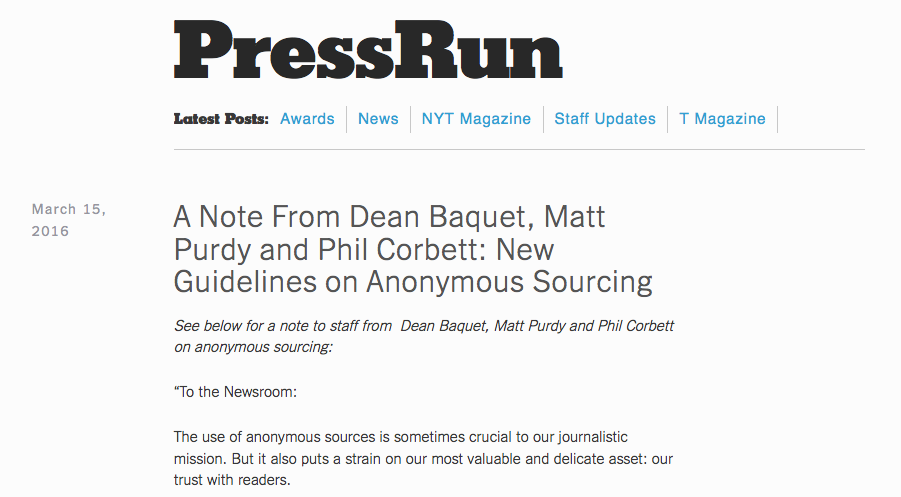
newrules

In a memo to the Times’ staff on March 15, Executive Editor Dean Baquet, Deputy Executive Editor Matt Purdy, and Standards Editor Philip Corbett noted that while sometimes crucial to the journalistic mission, the use of anonymous sources “also puts a strain on our most valuable and delicate asset: our trust with readers. … [R]eaders question whether anonymity allows unnamed people to skew a story in favor of their own agenda. In rare cases, we have published information from anonymous sources without enough questions or skepticism—and it has turned out to be wrong.”

The Times stylebook has long provided strong and clear criteria governing anonymous sourcing, but the memo introduced three new procedures and a reminder. When anonymous sources are the primary news element in a story, the story must get a signoff from one of the newspaper’s three top editors. Other use of anonymous sources must have the approval of the relevant department head or deputy. Direct quotes from anonymous sources will be permitted only rarely. And, finally, the memo reminds reporters that at least one Times editor must know the specific identity of any anonymous sources before publication.

The memo did not say so, but Times Public Editor Margaret Sullivan suggested the crackdown was the result of two embarrassing errors in front page stories over a six-month period in 2015. See her reviews of those mistakes here and here.

Sullivan has been campaigning in the newsroom for tighter control over anonymous sources. In 2014, she launched a special section of her Public Editor’s Journal called Anonywatch to track nameless quotations in the Times.

Here’s the full memo

To the Newsroom:

The use of anonymous sources is sometimes crucial to our journalistic mission. But it also puts a strain on our most valuable and delicate asset: our trust with readers.

At best, granting anonymity allows us to reveal the atrocities of terror groups, government abuses or other situations where sources may risk their lives, freedom or careers by talking to us. In sensitive areas like national security reporting, it can be unavoidable. But in other cases, readers question whether anonymity allows unnamed people to skew a story in favor of their own agenda. In rare cases, we have published information from anonymous sources without enough questions or skepticism—and it has turned out to be wrong.

The use of anonymous sources presents the greatest risk in our most consequential, exclusive stories. But the appearance of anonymous sources in routine government and political stories, as well as many other enterprise and feature stories, also tests our credibility with readers. They routinely cite anonymous sources as one of their greatest concerns about The Times’s journalism.

After consulting with a number of our most experienced reporters and editors, we have decided to take several steps to raise the bar and provide added scrutiny for our use of anonymous sources. These new guidelines require top editors to approve the use of anonymity. But it is incumbent on everyone producing journalism throughout the newsroom to share the responsibility.

Our basic, longstanding criteria remain unchanged: Anonymity should be, as our stylebook entry says, “a last resort, for situations in which The Times could not otherwise publish information it considers newsworthy and reliable.” That standard should be taken seriously and applied rigorously. Material from anonymous sources should be “information,” not just spin or speculation. It should be “newsworthy,” not just color or embellishment. And it should be information we consider “reliable”—ideally because we have additional corroboration, or because we know that the source has first-hand, direct knowledge. Our level of skepticism should be high and our questions pointed. Without a named source, readers may see The Times as vouching for the information unequivocally—or, worse, as carrying water for someone else’s agenda. As far as possible, we should explain the source’s motivation and how he or she knows the information.

We recognize that in today’s hypercompetitive news environment, the tighter guidelines below inevitably mean that we will occasionally be beaten on a story. We have no intention of reducing our urgency in getting news to our readers. But we are prepared to pay the price of losing an occasional scoop in order to protect our precious credibility.

This is not an easy balance to strike, and these new guidelines may be just the starting point. We will review these steps in the coming months and make adjustments if necessary. For now, we want to adopt these new procedures, starting immediately in all departments:

1. Special rules apply when the lead of a story—that is, the primary news element—is based entirely on one or more anonymous sources.

Any such story must be presented in advance by the relevant department head to Dean, Matt or Susan. They should be told explicitly why their approval is being sought—that is, the story’s main news element depends on anonymous sourcing. The department head should be prepared to discuss the details of the sourcing and other reporting, including the identity of the source, if asked.

This conversation or email exchange should not be part of a routine discussion of multiple stories. Sending a batch of summaries or simply passing along a copy without comment is not enough. This should be a dedicated conversation, focusing entirely on the sourcing issue of this one story.

If it sounds as though this will slow down the process—that’s part of the point. A story that hangs entirely on anonymous sourcing should always get special scrutiny. If, for any reason, you have not received specific approval, the story should be held.

On rare occasions when all three of those editors will be unavailable, they will designate Phil or another masthead editor to grant these approvals. A note on the story should specify which masthead editor approved the sourcing.

2. Every other use of anonymous sourcing anywhere in any story must be personally approved in advance by the department head or deputy.

A note on the story should indicate that the sourcing has been approved, and by whom. Slot editors, copy editors and producers should not publish a story with any anonymous sourcing that does not have a note indicating that the department head or deputy has approved the sourcing.

3. Direct quotes from anonymous sources will be allowed only in rare instances and with the approval of the department head or deputy. Such quotes are generally used to add color—but by definition, merely adding color does not normally clear the bar of newsworthiness that justifies anonymous sourcing. If the substance of the quote is newsworthy, it can be paraphrased, and must be approved under the procedures above.

Sources who demand anonymity give up the opportunity to have their speculation or interpretation reflected in our stories, and such quotes will no longer be allowed except in the rare instances when the direct quote is pivotal to a story. Other exceptions might include ordinary individuals who are sharing personal details in difficult circumstances and whose voices are worth capturing—for instance, immigrants discussing their ordeal with smugglers, or patients sharing their medical histories. In all these cases, direct quotes from anonymous sources must be approved by the department head or deputy.

4. As a reminder, it continues to be a hard-and-fast rule that at least one editor must know the specific identity of any anonymous source before publication.

Departments should set up regular procedures to make sure this rule is followed consistently.

—Scott MacLeod

Live from Aleppo

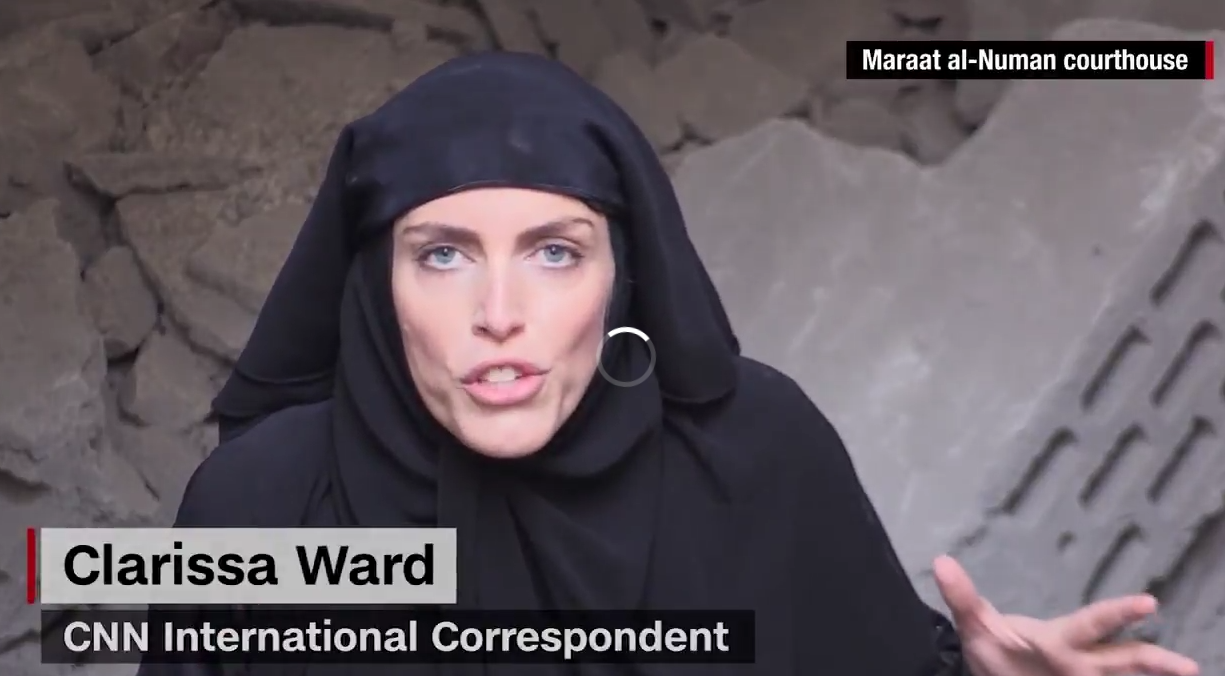
CNN has an important series on the devastation in Syria, reported by correspondent Clarissa Ward.

ward

Ward has won numerous awards for her foreign reporting, including from the Middle East—a Peabody, a Murrow, a duPont-Columbia, and four Emmys. The CNN series is called “The truth about Syria: Undercover behind rebel lines.”

Few foreign journalists dare enter the Syrian war zone anymore, after the beheadings of reporter James Foley and others at the hands of the Islamic State in Iraq and Syria (ISIS). Scores of foreign and Syrian journalists have died in the five-year-old conflict.

But Ward, along with producer Salma Abdelaziz and filmmaker Bilal Abdul Kareem, braved sniper fire, aerial bombardments, and the risk of kidnapping to report in rebel-held territory for a week recently. They even made the journey into Aleppo, a major city in northern Syria where 320,000 people may be trapped between the rebels and government forces.

Refinery29, a style website, posted a good interview with Ward about her reporting from Syria. It includes this discussion about the advantages of being a woman correspondent:

People often assume, Oh, you’re a woman working in the Middle East. Yikes! And I’m like, “Actually, there are a lot of advantages to being a woman.” I truly believe, as talented as my male counterparts are, I don’t think that a male Western journalist could have done this, because the whole cloak-of-invisibility thing is pretty important. So, just on the superficial level, that makes a huge difference.

I can wear a niqab and people don’t even look at me, because I’m wearing a niqab. It’s like a gesture of respect. You don’t look into the eyes of a woman who’s dressed like that, because she’s making a statement by wearing that outfit that she doesn’t encourage that kind of eye contact with men. So, that was crucial.

…I spent two days posing as a tourist. Then, I sort of slipped off into an alleyway in the old city, put a headscarf on, and went and lived with some activists for a week.

But beyond that, I think there are several things. First of all, you get to participate and engage with 50% of the population that your male counterparts just do not. I get to sit with women in the kitchen—and women know everything. You want to get the lowdown on what’s going on in that village? Sit in the kitchen for a few hours. They are going to make you eat a lot of food, that’s a given, but that’s okay, because you’re in Syria and the food’s delicious. And then, they’re going to tell you everything that’s going on.

Because they are a fountain of information and knowledge and beyond that, they are—not to resort to stereotypes—but they are a little more willing to engage with you emotionally. I’ll give you an example: When I was in Aleppo a few years ago, there was heavy shelling going on. And as a Western woman, I can sit with the men or the women, which is another bonus. So, when I was sitting with the men and the bombardment started, I noticed that the men obviously got nervous, but no one articulated it. They just started smoking a lot of cigarettes and arguing with each other, because everyone was tense.

Whereas when I went and sat with the women, one woman was rocking back and forth, holding a pillow, one woman was crying hysterically, and one woman was praying. I just thought: This actually gives you a better sense of what people are really feeling when they hear the sounds of bombs. The men may sit there, argue, and smoke cigarettes, because they don’t want to start crying or rocking back and forth in the fetal position, but that is how they feel inside, as well. It’s just that the women are maybe a little more open about expressing it.

—Scott MacLeod

Turkey’s Press Crackdown

So much for the Turkish Model? After the Arab Spring, many touted the idea that Egypt and other Middle East countries should follow in Turkey’s footsteps as a Muslim nation operating on democratic principles. Among the cherished democratic principles, of course, is liberty of the press. The latest news from Turkey therefore is as distressing as it is depressing: authorities sent heavily armed police into the offices of the Zaman newspaper on March 4 and seized control of Turkey’s largest daily.

zaman

Once friendly to Recep Tayyip Erdoğan, who became president in 2014 after a decade as prime minister, Zaman has taken an increasingly critical editorial line on Turkey’s leader. Erdoğan had a political falling out with the Gulen movement, which is closely affiliated with Zaman, in 2013. Prosecutors accuse Zaman of engaging in terrorism propaganda.

The ongoing Turkish crackdown on the press extends well beyond Zaman, to reporters, columnists, and bloggers who criticize government policies or publish information deemed sensitive about national security, Kurdish demands, or Erdoğan’s rule. Turkey’s judiciary has reportedly charged some 1,800 people including many journalists under a law that prohibits “insulting the president.” Turkey has frequently blocked Twitter and YouTube, and Erdoğan has hinted at a total shutdown of social media.

Only days before the Zaman seizure, the state satellite signal provider yanked IMC TV off the air during a live broadcast—at the time, the channel was interviewing two senior Cumhuriyet journalists facing charges of exposing state secrets for reporting on the alleged transfer of weapons from Turkey to Syrian rebels.

Last fall, Turkish authorities seized the Ipek Media Group, firing journalists on its two opposition dailies and two opposition TV channels and transforming the media outlets into government mouthpieces.

According to the Committee to Protect Journalists, Turkey is among the worst jailers of journalists in the world, with 14 journalists imprisoned as of the end of 2015. It ranks 149th of 180 countries in the Reporters Without Borders World Press Freedom Index.

Today’s Zaman, the English-language version, issued a statement on the government’s seizure of the media group:

We are going through the darkest and gloomiest days in terms of freedom of the press, which is a major benchmark for democracy and the rule of law. Intellectuals, businesspeople, celebrities, civil society organizations, media organizations and journalists are being silenced via threats and blackmail.

Speaking to the New York Times, veteran political journalist Asli Aydintasbas, who  lost her column in the daily Milliyet newspaper reportedly under government pressure last year, said:

This pattern is appalling, and Turkey is galloping towards an authoritarian regime full speed ahead. Unfortunately, the world, in particular the E.U., remains silent. The government here can sense the vulnerability in the West, especially since the beginning of the refugee crisis, and is pushing the boundaries to consolidate its power.

—Scott MacLeod