
media chinwag

Musings on Journalism in the Online Age

Tag: Donald Trump

How to Report on Political Slime

Even in a presidential election race deplorable for personal attacks and vulgar language, the exchange about the candidates’ wives seemed to be a low point.
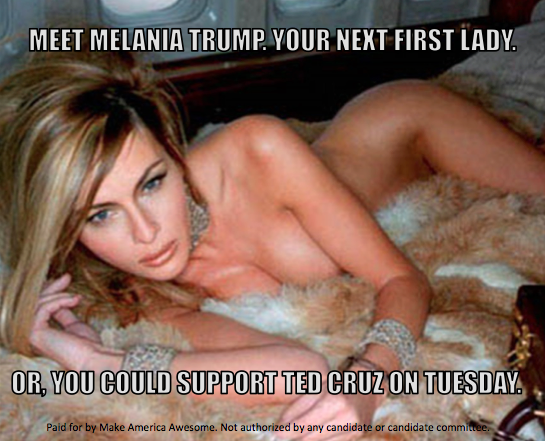
cruzad

Before the Utah Republican caucuses on March 22 a Super PAC supporting Ted Cruz ran Facebook ads with a photo of Donald Trump’s wife Melania posing in the nude, with the caption: “Meet Melania Trump. Your Next First Lady. Or, You Could Support Ted Cruz on Tuesday.” (Cruz won the voting, 69 percent to Trump’s 14 percent.)

Donald Trump fired back with a tweet threatening to “spill the beans” about Cruz’s wife Heidi:

Lyin’ Ted Cruz just used a picture of Melania from a G.Q. shoot in his ad. Be careful, Lyin’ Ted, or I will spill the beans on your wife!

Journalists gleefully took to social media, airwaves, and websites of reputable print and broadcast news organizations to cover the latest brawl involving Donald Trump.

The Trump-Cruz tussle continued on Twitter and with sound bites throughout the week. Cruz taunted, “Donald, if you try to attack Heidi, you’re more of a coward than I thought.” Trump responded with a retweet depicting a glamorous Melania side-by-side a scowling Heidi with the line, “A picture is worth a thousand words.” Cruz came back with more: “Donald, real men don’t attack women,” and “Donald, you’re a sniveling coward, and leave Heidi the hell alone.”

The War Over the Wives was extraordinary, albeit perverse, political theater. But was it news, deserving of coverage by journalists? Should the personal lives of politicians and their families be off limits? The answers to these questions are not as simple as we may like.

Undoubtedly, the right to privacy must be respected by journalists. However, exceptions can and should be made when there is an overwhelming public interest. President Bill Clinton’s private life could not be considered off limits in his “inappropriate relationship” with a 22-year-old White House intern. It illustrated several failings of legitimate interest to the public, from predatory sexual behavior and lack of sound judgment of the commander in chief to dishonoring America’s highest office.

Another exception is when public figures willingly remove the curtain of privacy, including the one around their families. The glamour image in the pro-Cruz ad came from a photo shoot published in 2000 by British GQ, when 30-year-old Melania Knauss of Slovenia was Trump’s fashion-model girlfriend (they were married five years later). According to the magazine, the photo shoot—with Melania “wearing handcuffs, wielding diamonds, and holding a chrome pistol”—took place on Trump’s customized Boeing 727.

gq cover

Though tasteless and opportunistic—well, slimy—the pro-Cruz ad, sponsored by the Make America Awesome political action committee, touched on a reasonable question concerning Trump’s lifestyle choices. With Trump loudly questioning the values of entire communities—Mexicans and Muslims, for example—his own values are certainly fair game.

Trump’s retort—as tacky, bullying, and slimy as it was—also touched on a valid issue. The “beans” appeared to refer to Heidi Cruz’s bout with depression a decade ago—including an incident that has been reported by the New York Times among others.

In 2005, after Heidi quit a post at the White House to be reunited with her public-servant husband in Texas, police responding to a 911 call reportedly found Heidi sitting next to an expressway with her head in her hands. An officer’s report later stated: “I believed that she was a danger to herself.”

The personal background of a prospective First Lady is of legitimate interest to voters. This is especially reasonable in this case, given that Heidi Cruz has played an active public role campaigning and raising money in her husband’s quest for the White House. (It can also be noted that the Cruz campaign has used their young children as cuddly props in political ads, promoting the image of Cruz as a stable family man.)

So it’s difficult for journalists to ignore personal attacks like the Cruz-Trump exchanges when the attacks relate to issues of public interest. The question is how to appropriately report on the slime-slinging.

Huffington Post came up with an idea in mid-2015. The editors felt that the Trump campaign was a “sideshow,” to be expected from a self-promoting tycoon who had made a second career as a reality TV star.

So Huffpost announced it would cover Trump’s campaign in the Entertainment section rather than as part of its political coverage. “If you are interested in what The Donald has to say, you’ll find it next to our stories on the Kardashians and The Bachelorette,” the editors said in a note to readers. By December, with Trump blowing away the rest of the Republican field for six consecutive months, it became clear this was not the answer, and Arianna Huffington herself announced a change in plan. “We will no longer be covering his campaign in Entertainment,” she told readers. It has “morphed into something else: an ugly and dangerous force in American politics.”

In a column in The Fix, Washington Post writer Callum Borchers suggests making a clear distinction between remarks related to policy and those that are not:

When Trump says he will deport every last undocumented immigrant living in the United States, the media have to cover the statement extensively because it’s about what he plans to do as president. There are serious questions to answer: Is the proposal realistic? What would it cost? How would it affect the economy? What would it do to America’s image?

When Trump says he will “spill the beans” on Cruz’s wife, however, the media response should be much more muffled. Not silent—you can’t just pretend he never said it or that Cruz never responded—but there’s not really substance to dissect. The sole purpose of a comment like that is to steal airtime and ink that might otherwise be devoted to issues that actually matter.

That’s a start, but journalists need to go further. The massive media attention given to Trump’s outbursts and the personal attacks exchanged by candidates is part of the deeper problem of the horse race coverage of American politics. That’s the gallop of 24/7 coverage highlighting controversial comments, gaffes, petty squabbles, personality clashes, and opinion polls that overtakes coverage of substantive issues. It’s a problem that has become even greater in the digital media age, where journalists’ reports are left competing with the endless chatter and diatribes on cable shows and social media not to mention the propaganda output of political organizations.

Part of the solution is to double-down on packaging and framing of political coverage that is worthy of the press’s role in a democracy. The professional news media needs to keep the focus overwhelmingly on the serious issues of the day and the candidates’ positions on them, and not get sucked into the vortex of sensational tweets and sound bites. Slime sells, so this is an important test for news media establishments hungry for ratings, web traffic, and profits.

When matters like a candidate’s values or personal lifestyle do become a legitimate public interest, the media should report on this in a measured, thorough, and responsible manner. The coverage should be kept in proper proportion to the coverage of other public concerns, such as the candidates’ positions on pressing domestic and foreign policy issues. The character of politicians who revel in slime tactics should also receive appropriate scrutiny.

One thing we saw again in the War Over the Wives is the pitiful state of political discourse in a nation to which the world looks for leadership. That’s a story worth covering.

—Scott MacLeod
Covering the Hate Beat

A notable feature of the 2016 race for the White House has been the free flowing comments of some Republican candidates against economic migrants and political refugees and, by association, against the Latino and Muslim communities. The comments go beyond anti-immigration rhetoric and cross the line into the realm of hate speech.

hatespeech

Businessman Donald Trump led the way in his presidential announcement speech on June 16 by describing Mexican immigrants as criminals, drug smugglers, and rapists. After the terrorist attacks in Paris on November 13, he redirected his venom toward Muslims. He called for a database to monitor Syrian refugees and possibly all American Muslims as well. Trump accompanied this view with a statement questioning the loyalty of American Muslims, claiming that immediately after the September 11 terrorist attack on Manhattan’s World Trade Center “thousands and thousands of people were cheering” across the river in Jersey City “where you have large Arab populations.”

Trump’s Islam-bashing actually started long before he became the leading contender for the Republican presidential nomination—he’s been at the top of the polls since June. He was one of the loudest voices in the United States pushing right-wing claims intended to smear President Barack Obama—that he was born in Kenya—which would disqualify him from occupying the presidency—and that he was a secret Muslim.

Ben Carson, an African-American neurosurgeon in the Republican race, chimed in that Muslims are unfit to be president of the United States because of their religious faith. Ted Cruz, a senator from Texas and another Republican candidate, called for banning refugees from Syria if they are Muslim, but letting Christians in. “There is no meaningful risk of Christians committing acts of terror,” he explained. Another contender, Senator Marco Rubio of Florida, echoed a threat by Trump to shut down U.S. mosques as venues inspiring radicalism. In the latest opinion survey, Trump, Rubio, Cruz, and Carson lead the Republican race with 36, 14, 12, and 10 percent support, respectively, among likely Republican primary voters.

To a great extent, American mainstream news media organizations, wittingly or otherwise, have propelled the hate speech. They have hyped the sound bites, replaying them in headline after headline and broadcast after broadcast, to the point that the comments have enabled the candidates to drive news coverage and thus dominate the campaign discourse. Moreover, too rarely are the comments characterized as hate speech, but are rather labeled as “controversial” or “provocative.” Here journalists are pursuing a false objectivity, eager to prove they are not biased for or against any candidate or party. They are also taking refuge in a false equivalency that treats comments defending or attacking Latino or Muslim communities as equally valid and acceptable political discourse.

Hate speech is broadly protected by the First Amendment, giving Trump and the other Republican candidates a constitutional right to make their odious comments. In Europe, they would need to be more careful. Britain’s Racial and Religious Hatred Act of 2006 makes it an offense to incite hatred against a group of people based on their religious beliefs. In France, even an icon such as Brigitte Bardot has been convicted and fined for inciting hatred with anti-Muslim comments, including: “My country, France, my homeland, my land is again invaded by an overpopulation of foreigners, especially Muslims.”

Nor in the United States is the right of free speech absolute. Incitement of violence, for example, is not fully protected—and there are reasons to believe that Trump’s remarks have incited violence. The cartoons mocking the Prophet Mohammed published by the Danish newspaper Jyllands-Posten became a cause célèbre for many free speech advocates, who argued that by definition free expression must include the right to spout offensive ideas. (The cartoons most certainly were a direct cause of the anti-Danish protests and riots that swept the Islamic World afterwards, with some 200 deaths.) In an aggressive campaign asserting such a right, the French satirical weekly Charlie Hebdo famously persisted in publishing insulting cartoons of the Prophet Mohammed. When Muslim extremists attacked the magazine’s offices and slaughtered 12 people last January, massive demonstrations erupted across France proclaiming “Je Suis Charlie,” ostensibly in defense of free speech.

These can be difficult issues, certainly for journalists, who see part of their calling as a mission to defend the right to a free press. Nobody should argue that the news media should ignore hate speech, least of all when it is spewed forth by public figures and even aspirants to the presidency. The question is how to cover it.

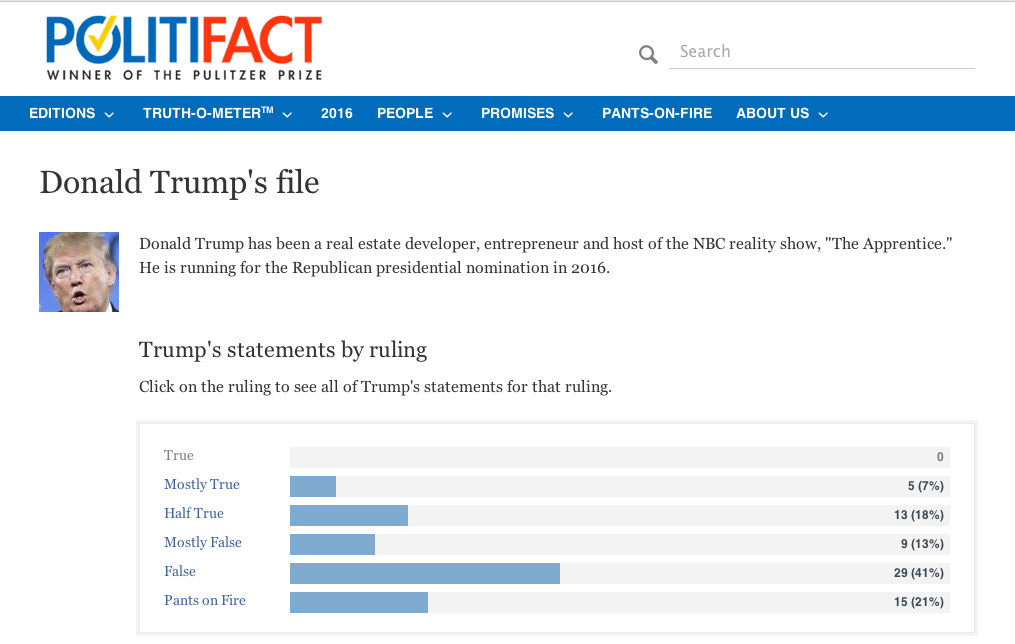
When journalists cover criticism of the hate-mongers, they provide readers and viewers with important alternative viewpoints. News media outlets have traditionally called out lies or provided context on their editorial and Op-Ed pages. Some news media and civil society organizations have institutionalized platforms that make fact checking a discrete service holding public figures accountable for the accuracy of their statements. The Washington Post, FactCheck.org, and PolitFact.com have done admirable work in exposing Trump’s untruths about Latinos and Muslims. In September, the New York Times carried a strongly worded editorial criticizing the Republican attack on Muslims.

But this is not enough, not in an era when the best intentions of the finest journalists are often drowned out by the deafening idiocy of “debates” on so many cable and satellite so-called news channels, or otherwise overwhelmed by social media chatter.

News executives and beat journalists alike need to take a long, hard look at how to define and treat hate speech in the digital media age. One of the principles of journalism is pursuit of the truth—and “truth” is not just dutifully recording and endlessly repeating the hate speech of politicians, but also providing background and perspective. Journalists have an important obligation to their societies to be responsible framers of the public discussion—but this is not accomplished when the endless repetition of the hateful sound bites overwhelms the few stories or editorials here and there that attempt to give critical context.

Broadly speaking, the American mainstream news media has failed miserably in its obligation to provide a comprehensive and proportional narrative of American life—including the lives and voices of ethnic and religious minorities. It should go without saying that Latino and Muslim communities and new immigrants—including the undocumented immigrants that Republicans are so fond of baiting—have made enormous positive contributions to the economic and cultural vitality of the United States. America, indeed, is a nation of immigrants. Yet, pack journalism’s obsession with sound bytes and easy headlines reinforces ignorance about minority communities and the issues around them.

There are a number of immediate steps that American editors and reporters can take to address hate speech. They can put the brakes on automatic, continuous, tabloid-style coverage that treats a politician spewing hate speech as if it was just Justin Bieber committing another act of adolescent mischief. Instead, they can provide their readers and viewers with thoughtful explorations and discussions that use universal human values, rather than the false objectivity and balance supposedly conferred by equal column inches and air time, as journalism’s frame of reference. American journalists can devote space to much fuller, more responsible coverage of communities upon which demagogues are apt to prey.

At the heart of the matter is the philosophical question of free speech. Without any hesitation, it should be practiced and defended at all costs. Whether one cites Supreme Court decisions or the law of common sense, it is clear that healthy societies are built upon the free flow of information and opinions. That is precisely why it is so important that journalists not abuse their right of free speech, or enable others to abuse it. Journalists need not scapegoat, defame, or humiliate our most vulnerable communities, or provide the megaphone for those who do, to prove that free speech is a value worth defending.

—Scott MacLeod